Pace, Not Panic: A GCSE Maths Exam-Hall Timing Plan That Holds Under Pressure
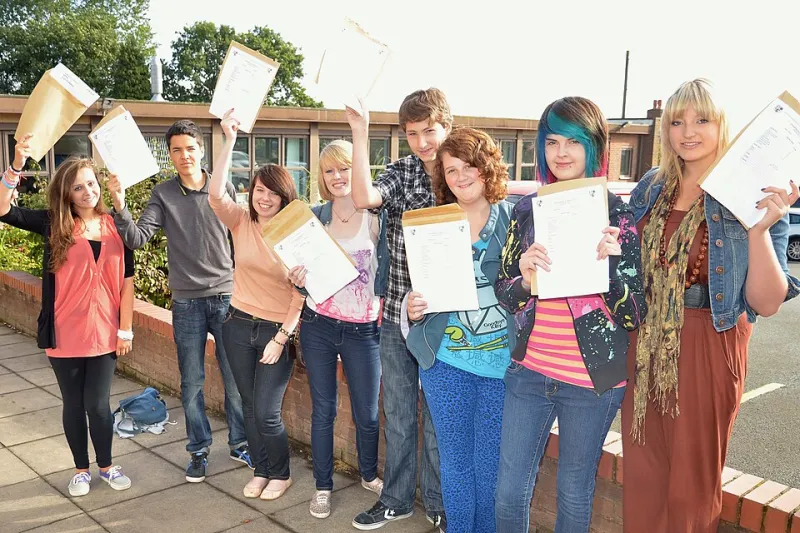
Photo: Sandwell Council, CC BY-SA 2.0, via Wikimedia Commons
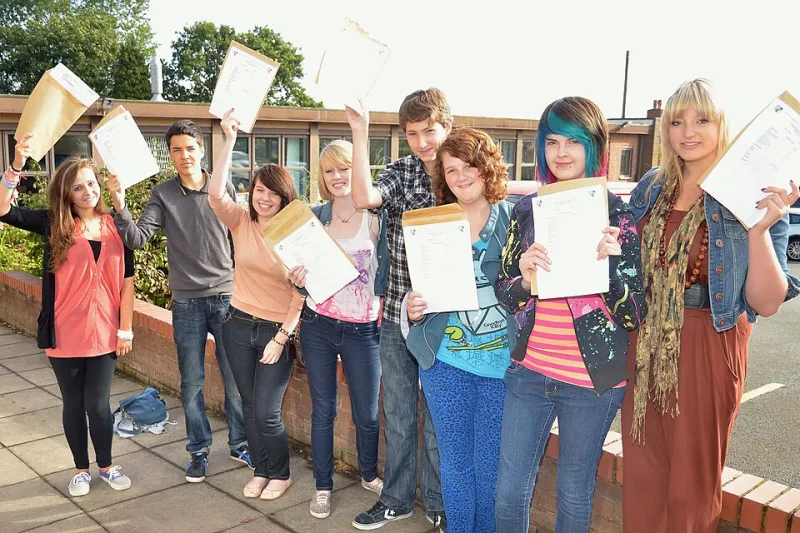
In the 2026 GCSE maths exams, many candidates will leave the hall knowing that they could have done more. The familiar post-exam complaint is not always that a topic was unfamiliar. It is that a question took too long, that the final page was rushed, or that a straightforward mark was missed while the candidate was trapped in a harder problem. Timing is not a cosmetic issue. It changes what a student is able to show.
The clock is not the enemy. A paper without a time limit would simply reward slow accumulation rather than fluent decision-making. The difficulty is that most students are never taught how to use the time deliberately. They are told to 'pace themselves' and then left to discover in the hall what that means. A clearer plan is possible, and it can be practised without turning every revision session into a mock exam.
Why timing problems look like knowledge problems
When a student runs out of time, the lost marks often appear to be knowledge gaps. In reality, they may be the result of a single question absorbing ten minutes, a misread instruction, or a rushed final calculation. Under pressure, working memory is less forgiving. A student who knows how to solve a quadratic equation may still lose the mark if they spend too long on an earlier problem and then try to complete the final question in two minutes.
This is why timing advice should be specific. 'Work faster' is not a strategy. 'Spend no more than three minutes on a two-mark question, then move on' is. The aim is to make the allocation of time visible before the exam, so that the student is not making a fresh judgement about every question while under stress.
Do the paper arithmetic first
Before practising pacing, students should know the shape of their paper. Most GCSE maths papers last 1 hour 30 minutes, but the mark total varies between boards and tiers. Check the specification and the front of a past paper rather than relying on memory. The same principle applies to calculator and non-calculator papers, which may reward different kinds of time use.
A simple calculation gives a working target. If a paper has 80 marks and lasts 90 minutes, that is roughly 1.1 minutes per mark, but no one should try to time every mark precisely. A more useful approach is to group questions by likely demand. One- and two-mark questions should be quick. Three- and four-mark questions need a short plan. Longer questions may deserve six to eight minutes. The point is not to produce a perfect schedule; it is to notice when a question is taking disproportionately long.
A three-pass plan
The following plan is designed for a 90-minute paper, but the proportions can be adjusted. It divides the exam into three passes rather than treating it as one continuous sprint.
First pass: bank the accessible marks
Spend about 35 minutes moving through the paper and starting any question you can begin within roughly 30 seconds. If a question does not offer an immediate route, put a light mark beside it and continue. The purpose of this pass is to secure the marks that are available without a long struggle and to give the candidate a sense of the paper's terrain.
This pass should not be careless. Read each question properly, write the method clearly and check units where they appear. But do not allow a single unfamiliar question to consume the opening section. A student who banks the straightforward marks first is in a stronger position to attempt the harder ones later.
Second pass: return to the marked questions
Use the next 35 minutes or so to return to the questions left blank or incomplete. This is where mark value matters. A two-mark question should not absorb six minutes. A four-mark question may need a short written plan before calculation. If a question remains inaccessible after a reasonable attempt, leave it again and move to another marked question.
The second pass is also the time to pick up partial marks. In GCSE maths, method marks are often available even when the final answer is wrong. Writing down a formula, drawing a diagram or setting out a correct first step can be worth more than a blank page. Students should be encouraged to leave evidence of their thinking rather than erase an imperfect attempt.
Final pass: check and complete
Reserve the last 15 to 20 minutes for checking and for any remaining questions. This is not a luxury. It is the part of the exam where units, rounding, calculator mode and copied numbers can be corrected. It is also the time to attempt every unfinished question, even if the attempt is brief.
A useful rule is that no question should be left completely blank. A labelled diagram, a stated formula or a single line of working gives the examiner something to credit. The final pass should be protected, not raided whenever an earlier question feels almost within reach.
The move-on rule
Every pacing plan needs a rule for leaving a question. A practical version is this: if you have no route after 45 to 60 seconds, mark the question and move on. If you are already midway through and hit a block, write the next line you know, box the question number and leave it.
The difficult part is resisting the feeling that 'one more minute' will solve it. Sometimes it will. Often it will not, and the minute is borrowed from three easier marks later in the paper. Students should practise leaving a question before they feel ready. That is a skill in itself, and it is far easier to rehearse in a low-stakes drill than to discover in the hall.
Low-stakes drills that build pacing
Pacing improves through short, repeated practice, not through one exhausting timed paper. The following drills are deliberately limited.
- The four-mark, five-minute drill. Choose a four-mark question, set a five-minute limit and review the working afterwards. The aim is not speed alone, but a sensible use of five minutes.
- The ten-mark sprint. Select ten marks of questions and allow twelve minutes. This trains the habit of moving through accessible marks without lingering.
- The first-pass drill. Give students 35 minutes to complete only the first pass of a paper. They do not need to finish the paper. They need to practise starting, marking and moving on.
- The stuck-question drill. Present a paper with one deliberately hard question early on. The task is to leave it and return later. This makes the move-on rule concrete.
- The checkpoint paper. Complete a full paper but stop at two planned checkpoints to compare progress with the target. This builds awareness without constant clock-watching.
These drills should be used selectively. Timing every piece of homework can create anxiety and distort the purpose of practice. Once or twice a week is usually enough to build familiarity.
In the hall
In the exam itself, students should use two or three checkpoints rather than watching the clock continuously. For a 90-minute paper, a glance at 35 minutes and 70 minutes is sufficient. If the candidate is more than five minutes behind at the first checkpoint, the second pass should be shortened rather than the final checking pass.
The clock is a tool for protecting marks, not a judge of intelligence. A student who leaves a difficult question, banks the accessible marks and returns with a clearer head is not giving up. They are making an exam decision. That decision can be taught, rehearsed and improved before results day.